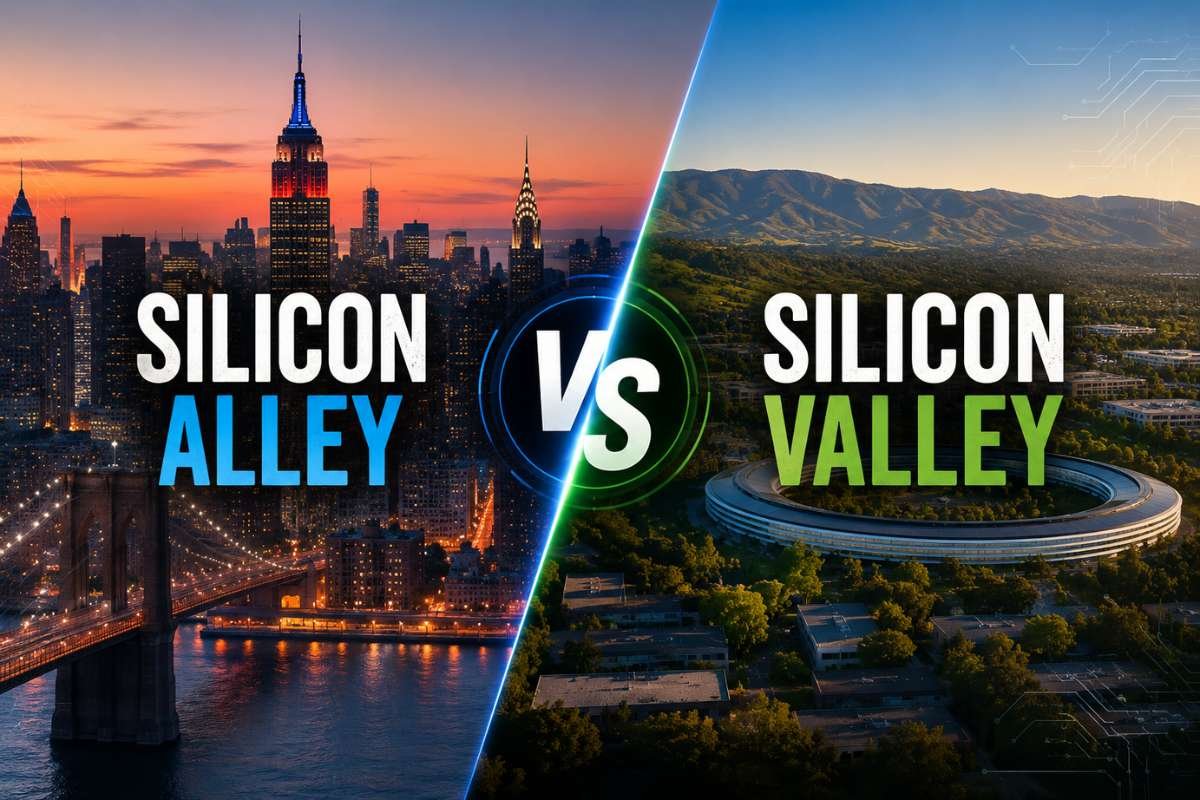
Silicon Valley sits in California and leads in deep tech, software, and big funding. Silicon Alley thrives in New York City, mixing tech with finance, media, and ads. While the West Coast takes bigger risks, the East Coast builds practical tools that make cash fast. Check out our full breakdown of Silicon Alley vs Silicon Valley to find the best fit for your next venture!
Have you ever heard of a place called Silicon Alley before today? Most folks know about Silicon Valley, but this other spot is quite special too. Today, we will look at Silicon Alley vs Silicon Valley to see how they match up. Both of these places drive a lot of new ideas every single day.
You might wonder why so many folks like to look at them side by side. One area brings in a massive amount of cash from big investors. The other space does great work in media, ads, and new finance tools. Each spot has a clear strength that helps it stand out from the crowd.
We want to show you what makes each place special in its own way. You will learn about their roots, their workers, and how they push tech forward. Let us dive in to see which area might fit your goals best.
Silicon Alley vs Silicon Valley: quick comparison
You might wonder how these two giant tech spaces look right next to each other. We made a quick table to show you the top facts right away.
| Silicon Valley | Feature | Silicon Alley |
| San Francisco Bay Area, CA | Location | New York City, NY |
| Late 1950s | Founded | Mid 1990s |
| Hardware, Cloud, AI | Major Industries | Fintech, Media, Adtech |
| Tech first, huge scale | Startup Ecosystem | Diverse fields, fast growth |
| Highest in the world | Venture Capital | Large and growing fast |
| Very high | Cost of Living | Very high |
| High | Office Rent | Extremely high |
| Top tier for tech | Average Salaries | High but varied |
| Tech-focused, casual | Networking | Corporate mix, fast-paced |
| Leads global tech trends | Global Influence | Leads global business |
This quick view shows how each area holds its own ground in the tech world. Now we can take a closer look at the roots of each spot.
What is Silicon Valley?
The tech world as we know it today started in a very specific place. This famous area sits right in the sunny San Francisco Bay Area of California. Folks love this spot because it is the true birthplace of modern tech chips.
You can find major fields here like cloud software, hardware, and deep AI tools. Giant brands like Apple, Google, and Meta call this massive tech hub their home. The startup culture here focuses on wild growth and big risks every single day.
Investors prefer this zone because it holds a massive pool of deep tech skills. That rich history brings a safe feeling to people who fund new ideas. Next, we should see how the East Coast built a unique rival path.
What is Silicon Alley?
Now, we must turn our eyes to the busy streets of Manhattan in New York. This lively area is the vibrant heart of the fast-growing Silicon Alley scene. It grew from a small print zone into a powerhouse for new ideas.
You will find a heavy focus here on media, finance, and ad tools. Lately, new AI projects have also started to pop up across the city. This space blends tech with old fields that already rule the local market.
It differs from the West Coast because it does not live in a tech bubble. The tech firms here must serve the needs of real, diverse business firms. Let us see how they stack up when they go head-to-head.
Silicon Alley vs Silicon Valley: Key differences

To truly choose between these spots, you must look at a few main things. We broke down the core facts to make your choice a lot easier.
Here is the updated breakdown for those key areas. This structure lets readers scan the vital metrics in just a few seconds.
Startup ecosystem
The West Coast still holds a much larger number of startups than any other space. You can find tens of thousands of active tech teams operating across the Bay Area right now. You will find world-famous accelerators like Y Combinator leading the way there. The local culture pushes founders to focus on massive scale and huge risks.
The East Coast scene has grown into a very tight, community-driven circle. New York’s startup ecosystem is often described as having 7,000+ startups, underscoring how broad the city’s tech base has become. Teams here tend to build business tools that make money from day one. They do not just hunt for users; they want real cash flow fast.
Venture capital
The concentration of cash in the West Coast hills remains the highest anywhere. In 2024, the Bay Area captured 46.3% of all U.S. venture funding, compared with 13.3% for New York. It is home to old, elite funds that can write massive checks easily. Angel investors walk the streets looking for the next big software shift.
New York handles a massive share of global funding through its own deep roots. A more recent NYC ecosystem report says New York attracted $31.1 billion in venture funding in 2025, which helps show how fast the East Coast hub is growing. You can raise your seed or growth funds without leaving your zip code.
Cost of living
Both of these tech hubs will demand a lot of cash from your wallet. Manhattan’s average asking rent reached $78.01 per square foot in Q1 2026, reflecting how expensive premium office space remains in New York. For a quick San Francisco comparison, the average asking office rent ended Q1 2026 at $71.19 per square foot. Housing costs in the Bay Area are high, and folks must buy cars.
Employee salaries stay at the very top tier in both of these places. You must pay a premium to secure the best minds for your team. Most teams use shared spaces or remote setups to keep their bills down.
Which is better: Silicon Alley or Silicon Valley?
You want this to pop so a reader can scan it in two seconds flat. Let us break it down into clean, fast choices based on your goals.
- Go West (Silicon Valley) If You Want to Build:
- Deep AI Tools: You get the top code minds and the best chip power.
- Enterprise SaaS: The local networks know how to scale software to a global level.
- Massive VC Rounds: The biggest funds sit right in those sunny hills.
- Go East (Silicon Alley) If You Want to Build:
- Fintech Apps: You sit right next door to the kings of Wall Street.
- Media and Ads: You can pitch to major media networks on your lunch break.
- Fashion Tech: You get instant access to the top style brands in the world.
Your choice must match your market, so pick the city that speaks your language. Which path looks like the best fit for your next big move?
Future of silicon alley and Silicon Valley

The way we build tech startups is shifting faster than ever before. To truly see what lies ahead, we must look at the future of Silicon Alley vs Silicon Valley. Both spaces are changing because of remote work and new hybrid team models.
Many small tech firms now choose to expand into secondary cities to save cash. Yet, the two main hubs still hold the lead in massive venture capital trends. California keeps its strong crown in deep AI leadership as agentic tools take over.
At the same time, New York secures huge wins through its massive fintech growth. Tech teams in Manhattan now build advanced AI agents to handle tough legal rules. These changes ensure that both coasts will stay highly relevant for a very long time.
Conclusion:
When we look at Silicon Alley vs Silicon Valley, neither space stands as the sole winner. Each unique tech hub holds a specific set of tools for your business. Your choice should depend on your industry, your funding goals, and your lifestyle.
If you want deep software tech, you should look toward the West Coast hills. If you want finance or media, the East Coast is your best bet. You must weigh your own top priorities before you pack up your bags. Which city has the right tools to turn your big dream into reality?
People also asked
1. What is the difference between Silicon Alley and Silicon Valley?
The main difference in the Silicon Alley vs Silicon Valley matchup comes down to industry focus and geography. The West Coast focuses on core technology hardware and deep software, while the New York scene excels at applying tech to finance, media, and commerce.
2. Why is Silicon Valley more famous?
The Bay Area holds a much longer history that dates back to the birth of the microchip in the mid-1900s. Its massive global influence grew from creating world-changing platforms like Google, Apple, and Facebook.
3. Can startups succeed outside Silicon Valley?
Absolutely, because the rise of remote work lets hybrid teams build great products from anywhere. Many regional ecosystems now raise large rounds without ever setting foot in California.