New York is home to some of the biggest names in financial technology, from billion-dollar giants to fast-growing startups. This article ranks the top fintech companies in NYC by valuation, including Ramp, Kalshi, and Chainalysis. It also explains why banks and startups now partner instead of compete. Read on to find out which companies lead the city’s fintech scene and why it matters for your career, investments, or curiosity.
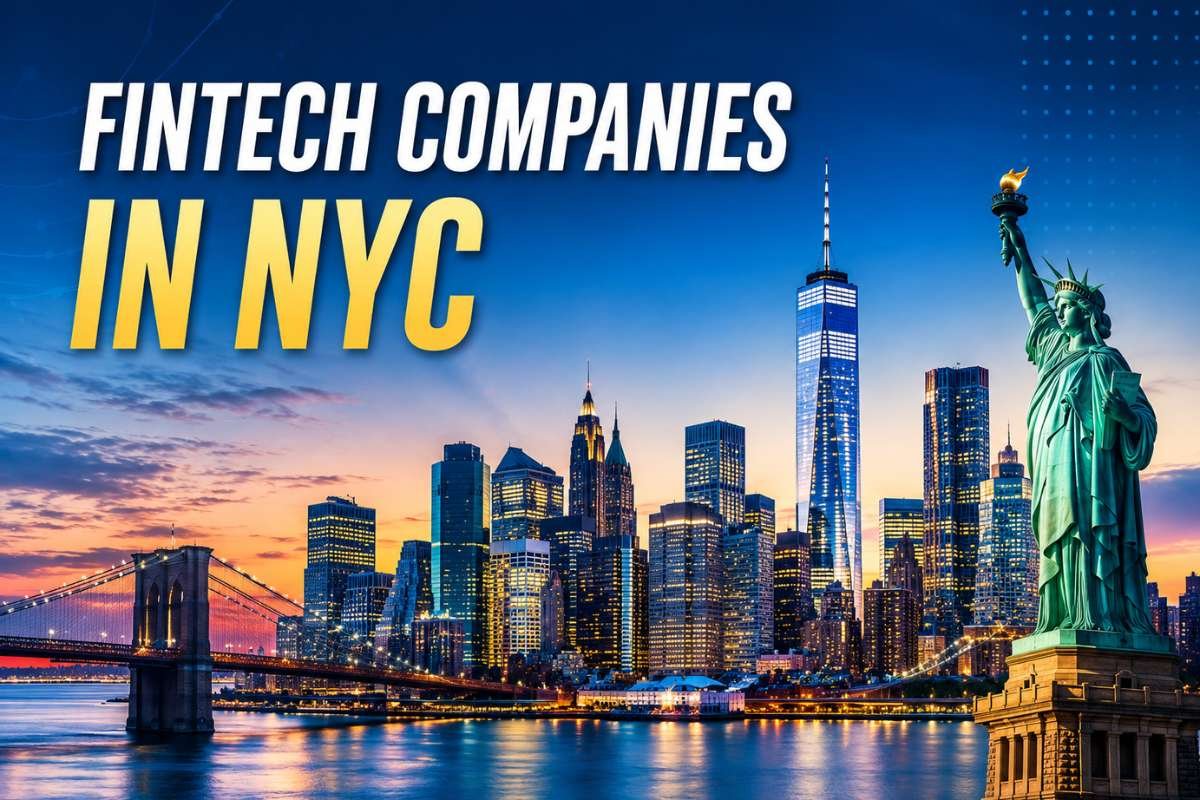
Walk down Wall Street today. You’ll notice something different. Old banking towers now sit next to sleek startup offices. Teams there build apps that move money in seconds. This is because fintech companies in NYC have grown fast. A decade ago, there were just a handful, but now the city has 1550+ active fintech companies.
New York has three big advantages. It has deep banking talent. It has strong venture capital. It has a massive customer base. Together, these make it a natural home for fintech. Maybe you’re job hunting, investing, or just curious. Either way, this scene matters. This article covers what makes NYC’s fintech world tick. It covers who the major players are and how technology is changing how these companies operate.
Different types of fintech companies in NYC
New York’s fintech scene has grown fast. The city now hosts hundreds of fintech startups. Some are brand new, others are worth billions. Even in slow investment years, New York fintech firms pull in strong funding. Only Silicon Valley beats it in total deal volume.
This growth spreads across many business types. Not all fintech firms do the same job. NYC’s ecosystem covers nearly every corner of finance:
| Category | What They Do | Example Focus Areas |
| Payments | Move money between people and businesses | Mobile payments, B2B transfers |
| Lending | Provide loans through digital platforms | Personal loans, small business credit |
| Insurtech | Modernize insurance buying and claims | Auto, health, renters insurance |
| Wealthtech | Automate investing and financial planning | Robo-advisors, trading apps |
| Crypto & Blockchain | Build digital asset infrastructure | Exchanges, custody, stablecoins |
| Regtech | Help firms meet compliance rules | Fraud detection, reporting tools |
Fintech companies in NYC don’t compete in one narrow lane. They solve different problems across the whole financial system. That keeps the local economy strong. Even if one sector slows down, others keep growing.
Two areas stand out as hubs. The Flatiron District is one. The Financial District is the other. Both are packed with fintech offices, payment processors, and crypto exchanges. This density helps companies hire fast. It also helps them partner fast and grow without leaving the city.
Top 7 fintech companies in NYC reshaping finance
This ranking is based on the most recent disclosed company valuation, either from a funding round, a tender offer, or a last known market cap. Only companies with a publicly confirmed number are included here, so a few well-known names are left out simply because their current valuation isn’t public.
The list mixes NYC-headquartered giants with one company that keeps a large NYC office despite being based elsewhere, since its size and local presence still make it relevant to the city’s fintech scene.
1. Ramp ($44 billion)
Ramp is a corporate card and finance operations platform headquartered in Manhattan. It reached a $44 billion valuation in June 2026 after a $750 million round led by ICONIQ Capital and GIC. The company serves more than 70,000 businesses and has surpassed $1.5 billion in annualized revenue.
Best known for: AI-powered corporate spend management.
2. Kalshi ($22 billion)
Kalshi is a New York-based prediction market platform regulated by the CFTC. It doubled its valuation to $22 billion in May 2026 after a $1 billion Series F round led by Coatue. The company’s annualized revenue has grown rapidly, driven largely by sports and event trading volume.
Best known for: Regulated event and prediction market trading.
3. Chainalysis ($8.5 billion)
Chainalysis is a blockchain data and analysis company headquartered in New York. Its last disclosed valuation was $8.6 billion from a 2022 funding round, and 2026 estimates place it around $8.5 billion. The company works with governments and financial institutions worldwide to trace crypto transactions and flag fraud.
Best known for: Blockchain data and crypto fraud investigation.
4. Plaid ($8 billion)

Plaid is headquartered in San Francisco but runs a large NYC office, making it one of the few non-native fintech companies in NYC with major local influence. The company’s valuation recovered to $8 billion in a February 2026 tender offer, after dropping from a 2021 peak of $13.4 billion. Its technology connects thousands of fintech apps to users’ bank accounts.
Best known for: Connecting apps to users’ bank accounts.
5. Bilt Rewards ($3.1 billion)
Bilt Rewards is a New York-based rewards platform that lets renters earn points on rent and everyday spending. The company reached a $3.1 billion valuation after a $200 million round led by General Catalyst. Bilt has scaled to nearly four million apartment units and reported EBITDA profitability in 2023.
Best known for: Rewards on rent and everyday spending.
6. Betterment ($1.3 billion)
Betterment is one of the original robo-advisors, headquartered in New York. Its last disclosed valuation was $1.3 billion, based on 2021 data. The company now manages $88 billion in client assets. It has grown through acquisitions, including Ellevest’s automated investing arm.
Best known for: Automated investing and retirement planning.
7. MoneyLion ($972 million, last market cap before acquisition)
MoneyLion was a publicly traded mobile banking company headquartered in New York before Gen Digital acquired it in April 2025 and delisted it from the NYSE. At the time, its market cap stood at $972 million. It’s included here since its valuation is fully documented, though it’s no longer an independent company.
Best known for: All-in-one mobile banking and financial wellness.
How is technology changing the way these companies operate?
AI and automation are changing how fintech companies in NYC operate. Many firms now use AI for fraud detection, credit scoring, and to run customer service chatbots. More than 90% of financial institutions have deployed AI countermeasures to fight fraud, and fintechs are three times more likely than traditional banks to reach advanced AI adoption. This cuts costs and speeds up decisions. Some of those decisions used to take days.
Blockchain is gaining ground too. Payment and settlement companies use it most to cut transaction times. Adoption still varies by company size, but the trend is clear. Financial services are getting faster and more automated.
Here’s how this shows up day to day:
- Faster approvals: AI can review a loan application in minutes, not days.
- Smarter fraud checks: Machine learning flags odd transactions before they cause harm.
- Better customer support: Chatbots answer common questions. This frees up staff for harder problems.
- Lower costs: Automation cuts the need for large support teams. Startups can scale without heavy overhead.
Expect more change ahead. More fintech companies in NYC will build AI directly into their products. It won’t just be an add-on feature.
Why are banks partnering with fintech startups instead of competing?
A few years ago, banks saw fintech startups as threats. That view has changed. Today, most big banks partner with fintech firms and don’t try to out-build them. Dave McKay, CEO of RBC, described this dynamic at the 2026 World Economic Forum in Davos, calling banks and fintechs “frenemies” that compete while relying on each other to scale innovation. He also warned that banks risk being cut out of the picture entirely if they remain just the last step in a payment.
This shift makes sense. Building new tech from scratch takes time, and it costs a lot. Partnering with a fast-moving startup solves that. Banks get modern features fast. Think instant transfers, budgeting tools, without years of development.
Startups also benefit. Bank partnerships give them access to millions of customers. They also get instant credibility. This is why many fintech companies in NYC now work with the very banks they once aimed to disrupt.
Conclusion
New York’s fintech scene took years to build. But it’s now one of the most important hubs in the industry. The city offers deep financial expertise, strong tech talent, and real investor interest. Few other cities can match that mix. From payment startups to robo-advisors, fintech companies in NYC shape how people manage money every day.
Banks and startups keep teaming up. AI keeps reshaping financial services. Because of this, New York’s role as a fintech leader will likely grow. Maybe you’re an investor, hunting for a job, or just curious. Either way, this city’s fintech scene is worth watching.
FAQs
1. What are the top 5 fintech companies?
Some of the most notable fintech companies in NYC include Ramp, Kalshi, Chainalysis, Plaid, and Bilt Rewards.
2. Is New York a fintech hub?
Yes. New York is one of the world’s top fintech hubs. It ranks just behind Silicon Valley in funding and company presence.
3. Why do fintech startups choose NYC over other cities?
NYC gives startups direct access to banks, investors, and a large customer base. That makes it easier to grow and form partnerships.
4. Do NYC fintech companies work with traditional banks?
Many do. Bank and fintech partnerships are now common. Both sides combine resources. Both sides reach more customers this way.
5. How is AI used by fintech companies in NYC?
AI helps with fraud detection, credit scoring, and customer support. It lets companies make decisions faster and at lower cost.
Sources: