

Morning arrived with quiet streets, dark storefronts, and empty sidewalks across New York. Familiar cafes, family shops, and busy restaurants locked their doors as the pandemic spread quickly. Owners watched daily income disappear while bills continued to arrive, leaving many unsure what the next week would bring. Fear touched every neighborhood, yet determination never disappeared completely.
Resilience in Business became more than an idea because several companies adapted with practical choices that kept them moving through difficult months. Their experiences reveal useful lessons for organizations of every size, whether local startups or established brands. Each example ahead shows how steady decisions created hope when uncertainty seemed impossible to escape.
Five common traits behind business survival
Before exploring individual stories, it helps to see the common patterns behind their survival. Resilience in Business appeared through practical choices that helped owners respond with confidence despite constant uncertainty. These themes offer a simple overview before the detailed examples ahead.
- Fast Decision Making: Quick action helped business owners adjust operations before challenges became harder to manage, protecting time and limited resources.
- Listening to Customer Needs: Paying close attention to changing expectations allowed businesses to offer services that matched what people needed most.
- Finding Fresh Income Sources: Additional revenue opportunities reduced dependence on a single source and created greater stability during uncertain months.
- Using Digital Tools Wisely: Simple digital solutions improved communication, supported sales, and made daily operations easier under changing conditions.
- Staying Connected With the Local Community: Regular updates and genuine community support encouraged customer loyalty and kept businesses visible during difficult times.
This format is cleaner, more engaging, and matches the style commonly used in professional blog articles.
Case study collection: Businesses that refused to give up
Every business faced different challenges, yet many found practical ways to keep moving forward. Resilience in Business appeared through smart choices, timely action, and a clear focus on serving customers. These examples show how simple adjustments helped businesses stay active during uncertain times.
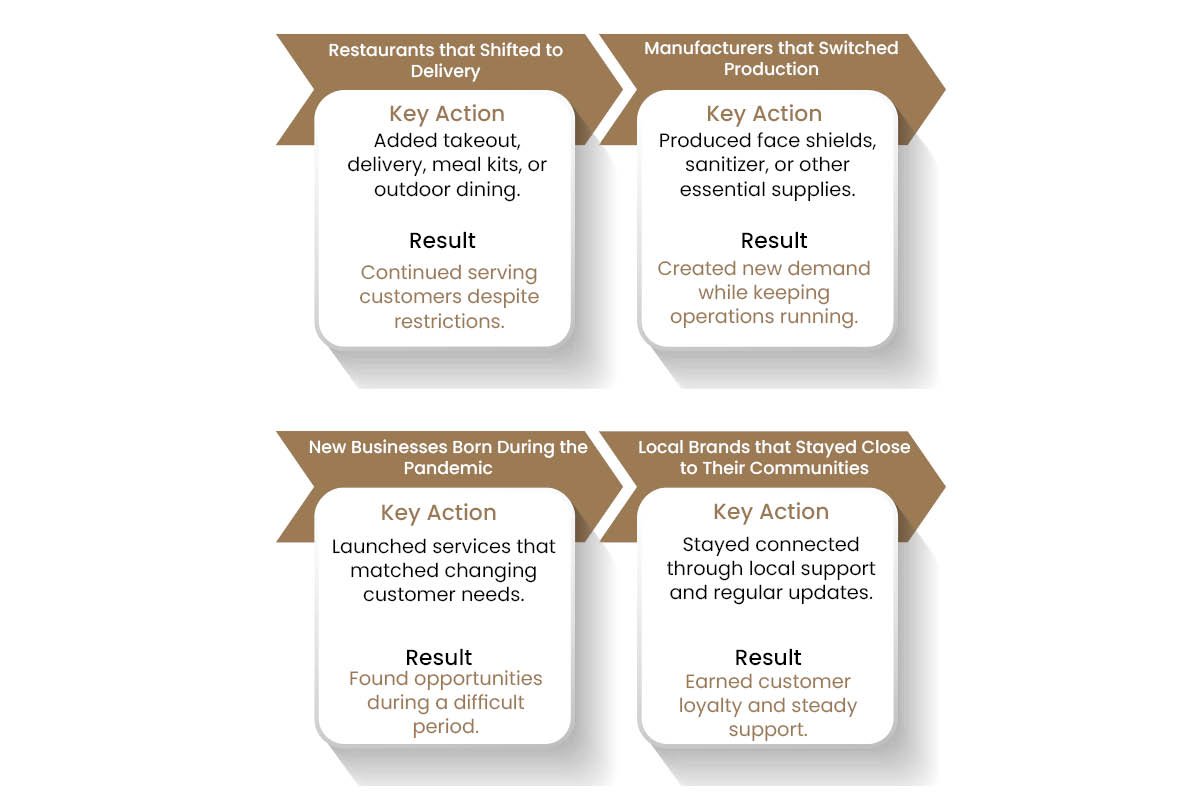
| Case Study | Key Action | Result |
| Restaurants that Shifted to Delivery | Added takeout, delivery, meal kits, or outdoor dining. | Continued serving customers despite restrictions. |
| Manufacturers that Switched Production | Produced face shields, sanitizer, or other essential supplies. | Created new demand while keeping operations running. |
| New Businesses Born During the Pandemic | Launched services that matched changing customer needs. | Found opportunities during a difficult period. |
| Local Brands that Stayed Close to Their Communities | Stayed connected through local support and regular updates. | Earned customer loyalty and steady support. |
The experiences above highlight practical approaches that helped businesses keep moving forward, introducing the key lessons covered next.
Practical lessons every business can apply
Every success story shared a few habits that any business can apply during difficult times. Resilience in Business often begins with practical thinking, clear communication, and a willingness to make timely decisions. The questions below highlight the key lessons without focusing on specific companies.
Q: What helped businesses react quickly?
A: Regular planning and prompt decisions allowed owners to respond before small challenges became larger problems.
Q: Why did customer communication matter?
A: Honest updates built trust and kept customers informed, making them more likely to stay connected during uncertain periods.
Q: How did digital sales support survival?
A: Online ordering, digital payments, and simple online communication helped businesses continue serving customers when in-person visits declined.
Q: Why was community support important?
A: Local encouragement created lasting relationships, giving many businesses steady support when they needed it most.
The biggest takeaway is simple: practical choices made at the right time can help businesses stay ready for whatever comes next.
Practical action plan for today’s business owners

Every business can prepare for uncertainty with simple habits that support better decisions over time. Resilience in Business grows through consistent planning instead of waiting for problems to appear. Use this roadmap as a practical guide.
- Step 1: Review Customer Needs
Check customer feedback regularly to identify changing expectations early.
- Step 2: Diversify Income
Avoid relying on one revenue source by exploring additional earning opportunities.
- Step 3: Build Your Online Presence
Keep your website, social media, and business information accurate and up to date.
- Step 4: Protect Your Cash Flow
Maintain emergency savings and monitor expenses to improve financial stability.
- Step 5: Build Meaningful Relationships
Stay connected with customers, suppliers, and local partners through honest communication.
Small, consistent actions today can help businesses respond with greater confidence when future challenges arise.
Closing reflection: Preparing for the next challenge
The experiences of New York businesses show that difficult times reward preparation, thoughtful decisions, and strong customer relationships. Resilience in Business is built through steady planning, financial awareness, and the ability to respond when circumstances change.
While no business can predict every challenge, every owner can prepare for one. Lasting success comes from building habits that support stability, earning customer trust, and staying ready to adjust whenever new opportunities or unexpected obstacles appear.