Wellness support can cover mental health care, fitness perks, health screenings, stress relief, and team events. Employers can mix health plan benefits, local vendors, and digital tools to meet different needs.
The right mix depends on your budget, team size, and work schedules. Some firms need only a simple wellness stipend, while others want onsite care and virtual help. This guide compares public and private options for an employee wellness program in NYC. It also shows how to launch and measure one that staff will use.
What Wellness Options Can NYC Companies Offer?
NYC employers can choose from public resources, private vendors, digital apps, and in-house events. The best mix pairs real health help with options employees can use during the workday. Start by listing your team’s main needs, then pick options that fit your budget.
1. Mental Health Support and Employee Assistance

Mental health support helps staff manage stress, anxiety, burnout, and personal challenges. Common options include confidential counseling, therapy referrals, self-care tools, and manager training.
The New York City Employee Assistance Program (NYC EAP) offers free, confidential help to eligible city employees and their families. Private employers can explore dedicated employee assistance programs (EAPs) or broader mental health plans. Spring Health gives employers access to therapy, medication management, and digital support tools.
When you compare vendors, check session limits, licensed staff, wait times, crisis support, and family coverage. Before adding a new perk to your employee wellness program in NYC, confirm what your health plan already covers.
2. Fitness and Movement Benefits
Fitness perks help staff move more and build healthy habits. NYC firms can offer gym memberships, virtual workouts, walking challenges, yoga, or onsite classes.
Wellhub gives eligible staff access to partner gyms, studios, and wellness apps through employer plans. Its network model suits teams spread across several boroughs.
Research supports the physical health benefits of workplace wellness. A systematic review found that multi-component workplace programs reduced employees’ body weight by an average of 2.61 kg.
Small firms can partner with a local studio or start lunchtime walking groups. Hybrid teams may like virtual classes, while frontline staff may need sessions around shifts. Flexible choices make an employee wellness program in NYC easier for every worker to use.
3. Stress Management and Mindfulness

Stress programs can include guided meditation, breathing exercises, mindfulness sessions, and talks on work pressure. The need is clear: 43% of U.S. workers said they typically felt tense or stressed during their workday, according to the American Psychological Association’s survey.
WorkWell NYC, the city’s workplace wellness program, offers city employees virtual yoga, meditation, and mental well-being workshops. Private vendors can run similar sessions onsite or online. Short sessions during paid work hours reach more people than after-work events.
4. Preventive Health and Screenings
Preventive wellness helps staff understand and manage health risks. Programs may include flu shots, health screenings, nutrition tips, posture checks, and referrals to primary care.
FRESH Medicine NYC offers health education workshops, nutrition consultations, and workplace health coaching. Its services also include health screenings, yoga, and meditation. Employers can request customized programs based on their team’s needs and wellness goals.
In any of employee wellness programs in NYC, privacy comes first. Before booking screenings, confirm vendor skills, staff consent, and data protection. Employers should see only group data, never personal medical details.
5. Wellness Stipends and Flexible Benefits

A wellness stipend gives employees a set amount to spend on approved health activities. Eligible costs might include fitness classes, meditation apps, or other wellness services.
Set clear rules for eligible costs, limits, receipts, and payment dates. Small firms can use this model to run lean employee wellness programs in NYC without managing many vendors. Check tax treatment with a qualified adviser before calling a stipend tax-free.
6. Team Wellness Experiences
Group events help colleagues connect while supporting well-being. Options include chair massage, yoga, cooking demos, and wellness fairs. Research supports the value of structured team activities. A review of 51 studies involving 8,439 people found that teamwork interventions significantly improved teamwork and team performance.
Shortcut’s NYC corporate wellness services include onsite activities such as chair massage and group sessions. Some formats are also available online or in hybrid settings.
These events suit staff appreciation days. Pair events with perks employees can use every month.
Here’s a quick summary of all the NYC wellness program providers mentioned above:
| Program or provider | Main services | Best fit |
| WorkWell NYC | City staff wellness resources, workshops, and mental well-being support | Eligible NYC government employees |
| NYC EAP | Confidential support, counseling resources, and referrals | Eligible city employees and families |
| Spring Health | Therapy, medication management, and digital mental health support | Employers prioritizing mental health |
| Wellhub | Gym and studio access, wellness apps, and membership options | Employers offering flexible fitness benefits |
| NY Corporate Wellness | Corporate wellness programs, health workshops, nutrition consultations, and health coaching | Employers seeking customized workplace wellness services |
| Shortcut | Office-based wellness activities and selected virtual or hybrid sessions | Employers planning team experiences |
Note: WorkWell NYC and NYC EAP serve eligible city employees. Private firms should not assume they can enroll. Ask each private vendor for a proposal covering who can join, service sites, contract terms, and total costs.
Learn More: Future of Work in NYC is changing faster than you think; Read before you are Left Behind
Which Wellness Options Suit Different Workforces?
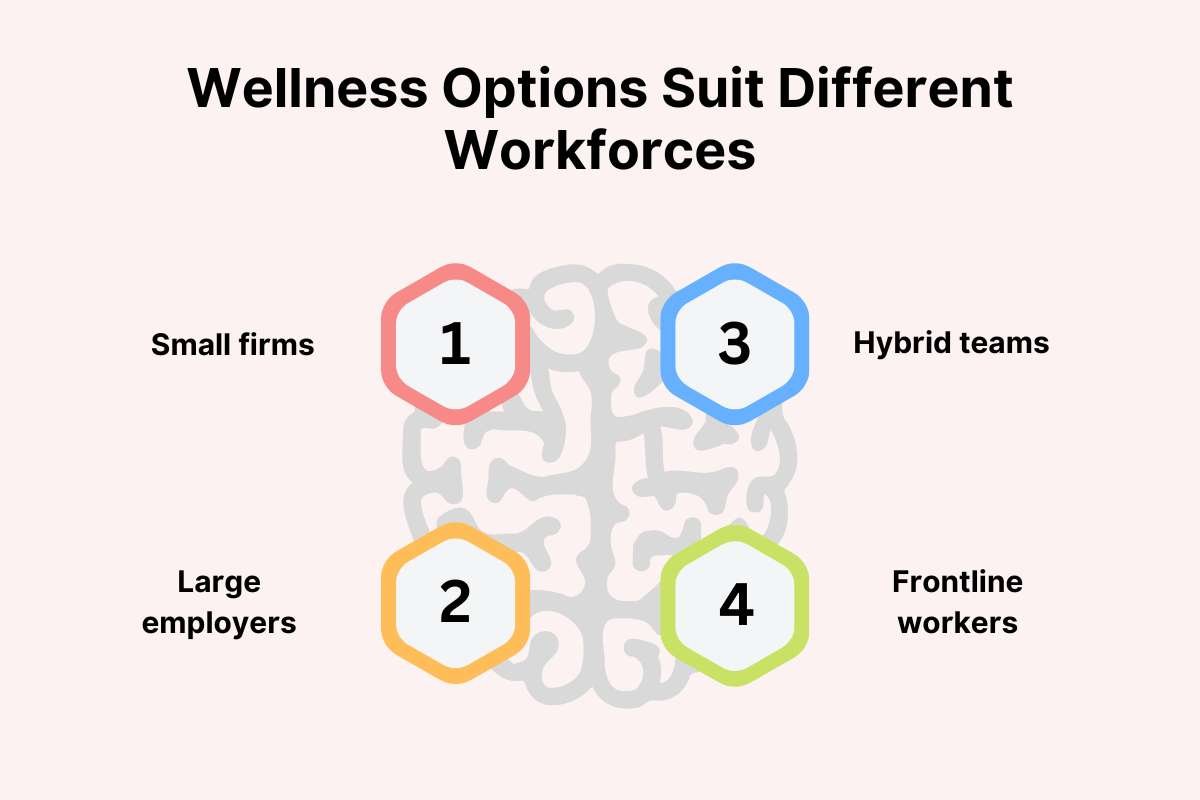
The right employee wellness program in NYC depends on where and when staff work.
- Small firms: Start with an EAP, a modest stipend, or occasional group sessions. Avoid large yearly deals.
- Large employers: Mix mental health care, fitness access, screenings, and engagement tools. Confirm the vendor supports many sites and tracks use.
- Hybrid teams: Favor digital counseling, virtual fitness, flexible stipends, and options staff can reach from anywhere.
- Frontline workers: Offer options outside office hours, multilingual resources, and onsite services. Avoid plans that require personal time or long travel.
Employees should not need to use every service to benefit.
How to Choose an Employee Wellness Program in NYC?
The best choice links employee needs to a clear budget, easy access, and measurable goals. Then set a baseline so you can judge whether the money is working.
Review each vendor against five practical factors:
- Services: Does it cover your main needs, such as mental health, fitness, prevention, or stress relief?
- Delivery: Are services onsite, virtual, app-based, or mixed?
- Eligibility: Can part-time staff, shift workers, remote staff, and families join?
- Coverage: Does it serve all five boroughs and staff outside NYC?
- Privacy: What does the vendor share with the employer, and how is health data protected?
The cost of an employee wellness program in NYC depends on its scope and level of support. Avidon Health estimates basic digital programs at $3-$5 per employee monthly, while comprehensive plans can exceed $100. Coaching, screenings, incentives, and setup may add costs.
A Quick Program Selection Checklist
- [ ] Name the top two or three needs.
- [ ] Set a budget and confirm all fees.
- [ ] Check coverage, hours, and who can join.
- [ ] Confirm privacy and data-sharing terms.
- [ ] Offer options for different schedules.
- [ ] Set use and satisfaction goals.
- [ ] Agree on a review date before signing.
What Should You Know Before Launching an Employee Wellness Program in NYC?

A successful employee wellness program needs more than a vendor contract. Employees must understand the perk, trust how data is handled, and have time to use it. A phased rollout lets you test demand and grow what works.
Cesar Carvalho, co-founder and CEO of Wellhub, highlights the value of leadership support. In an interview, he said, “Participation [in wellness programs] triples when the leadership team is involved in pushing the benefit to the employees and leading by example.”
| Timeline | Key actions |
| Days 1–30: Plan | Survey staff, review current benefits, set goals, compare vendors, and choose a pilot group. |
| Days 31–60: Pilot | Launch a few services, explain privacy rules, promote access, and collect feedback. |
| Days 61–90: Improve | Review use, fix access gaps, adjust the offer, and plan a wider rollout. |
Low use does not always mean low interest. Sessions may clash with shifts, perks may be unclear, or privacy worries may hold people back. Offer several ways to join, and promise that managers will not see personal health details.
Do not launch too many services at once. Start small, ask employees what works, and expand from there.
Conclusion
Choosing the right employee wellness program in NYC starts with employee needs, vendor comparisons, and a realistic budget. Combine useful perks with easy access, clear privacy rules, and simple ways to measure results. Start small, learn from a pilot, and improve over time. Review your current perks and shortlist vendors before you sign a long contract.
FAQs
1. What is an employee wellness program?
It is a set of workplace benefits and activities that support physical, mental, and social well-being.
2. How much does an employee wellness program cost in NYC?
Costs vary by vendor, services, team size, and contract terms, so request a tailored quote.
3. Can small businesses in NYC offer wellness programs?
Yes. Small firms can start with stipends, digital tools, EAPs, or occasional group events.
4. Does NYC offer free employee wellness programs?
WorkWell NYC and NYC EAP serve eligible city employees. Private employers should check their own benefits.
5. How do you measure success of an employee wellness program in NYC?
Track use, feedback, and longer-term workforce trends against a clear baseline.